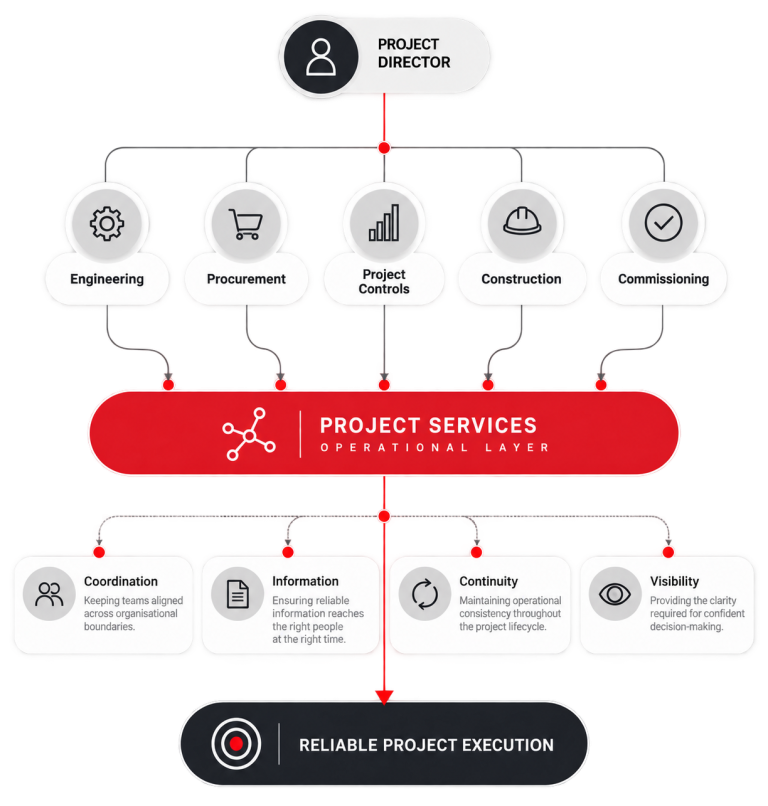
Complex EPC projects depend on many disciplines working together. Project Services provide the operational capabilities that connect them, strengthening continuity, coordination and execution throughout the project lifecycle.
Execution is strengthened between disciplines, not inside them.
Coordination
Keeping teams aligned across organisational boundaries.
Information
Ensuring reliable information reaches the right people at the right time.
Continuity
Maintaining operational consistency throughout the project lifecycle.
Visibility
Providing the clarity required for confident decision-making.
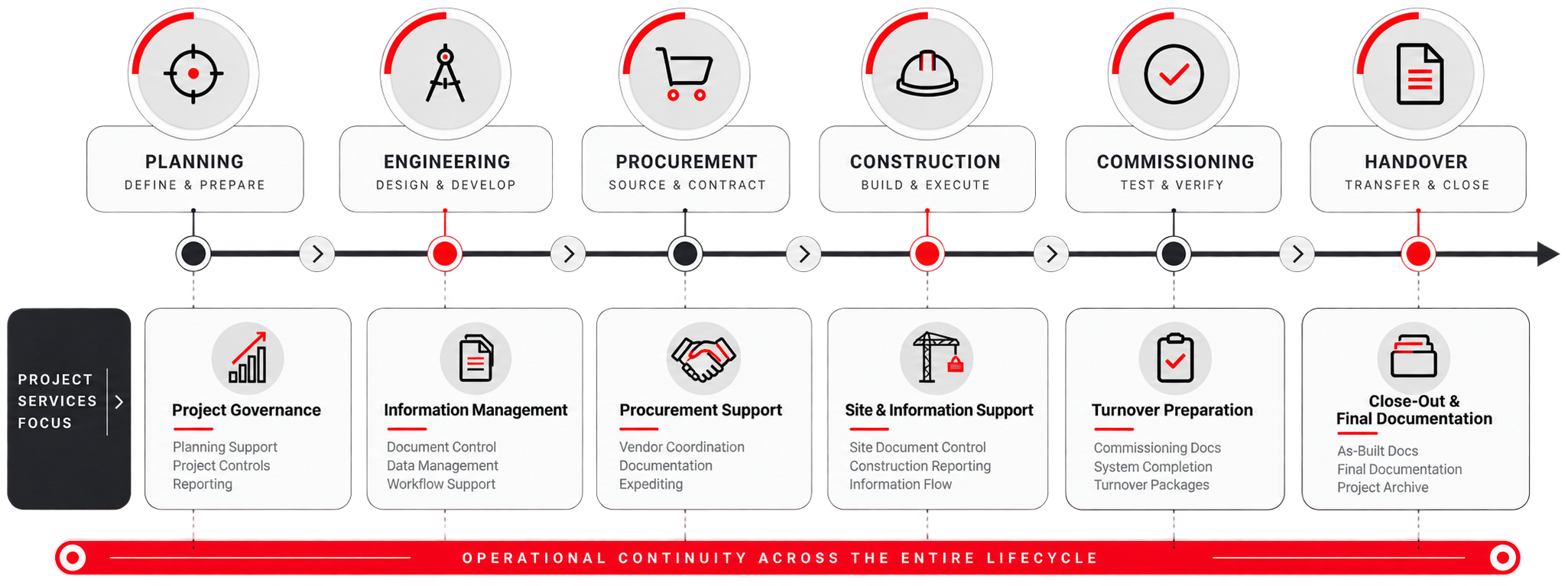
Project Services evolve with the project.
As projects progress from planning to close-out, operational priorities continuously change. Project Services adapt to each phase while preserving continuity, coordination and information quality across the entire lifecycle.
The project changes. The need for operational continuity does not.
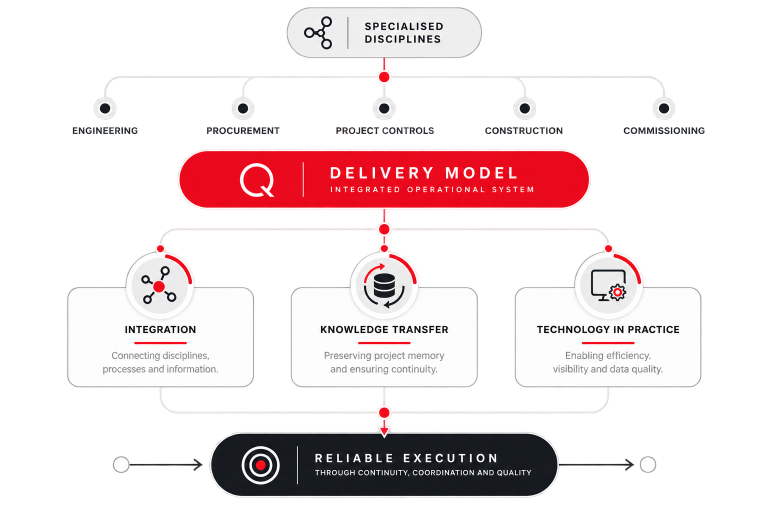
Execution improves when operational capabilities work as one system.
Every project relies on specialised disciplines. Real operational value emerges when these disciplines are connected through a consistent delivery model that preserves continuity, information quality and coordination from start to finish.
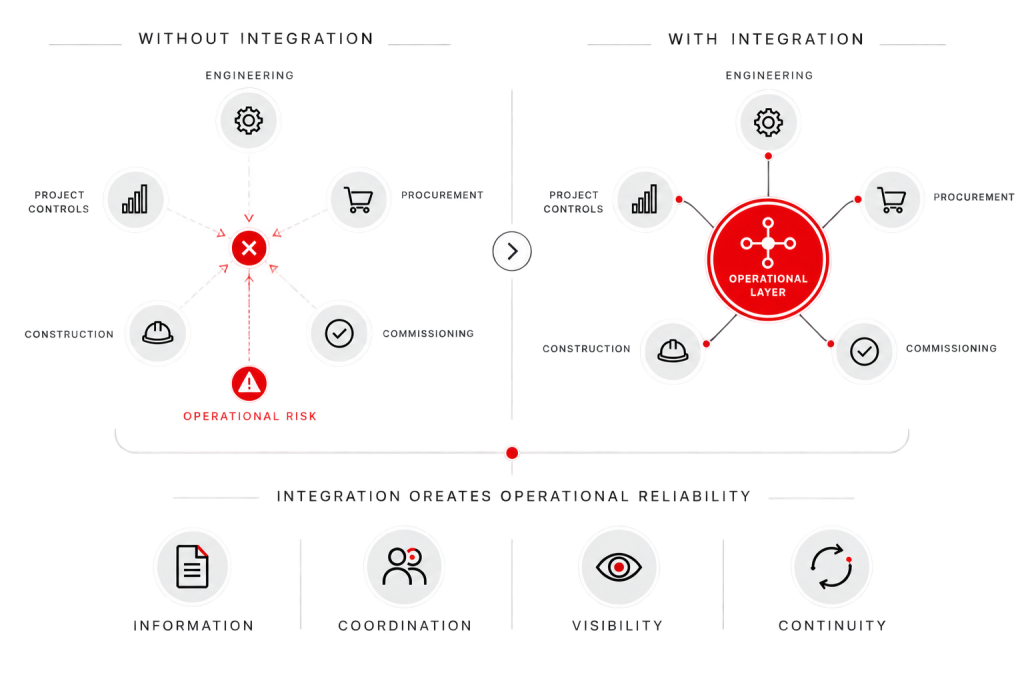
Projects fail at the interfaces, not within the disciplines.
Each discipline can perform exceptionally well in isolation. Operational risk emerges when information, responsibilities and decisions fail to move reliably across organisational boundaries. Integration is therefore not an additional service. It is the condition that allows every discipline to perform effectively.
Different operational domains. One integrated delivery system.
Project Services are most effective when they operate as an integrated system. By connecting disciplines, preserving information continuity and supporting execution across every project phase, they help complex EPC programmes perform with greater consistency and confidence.